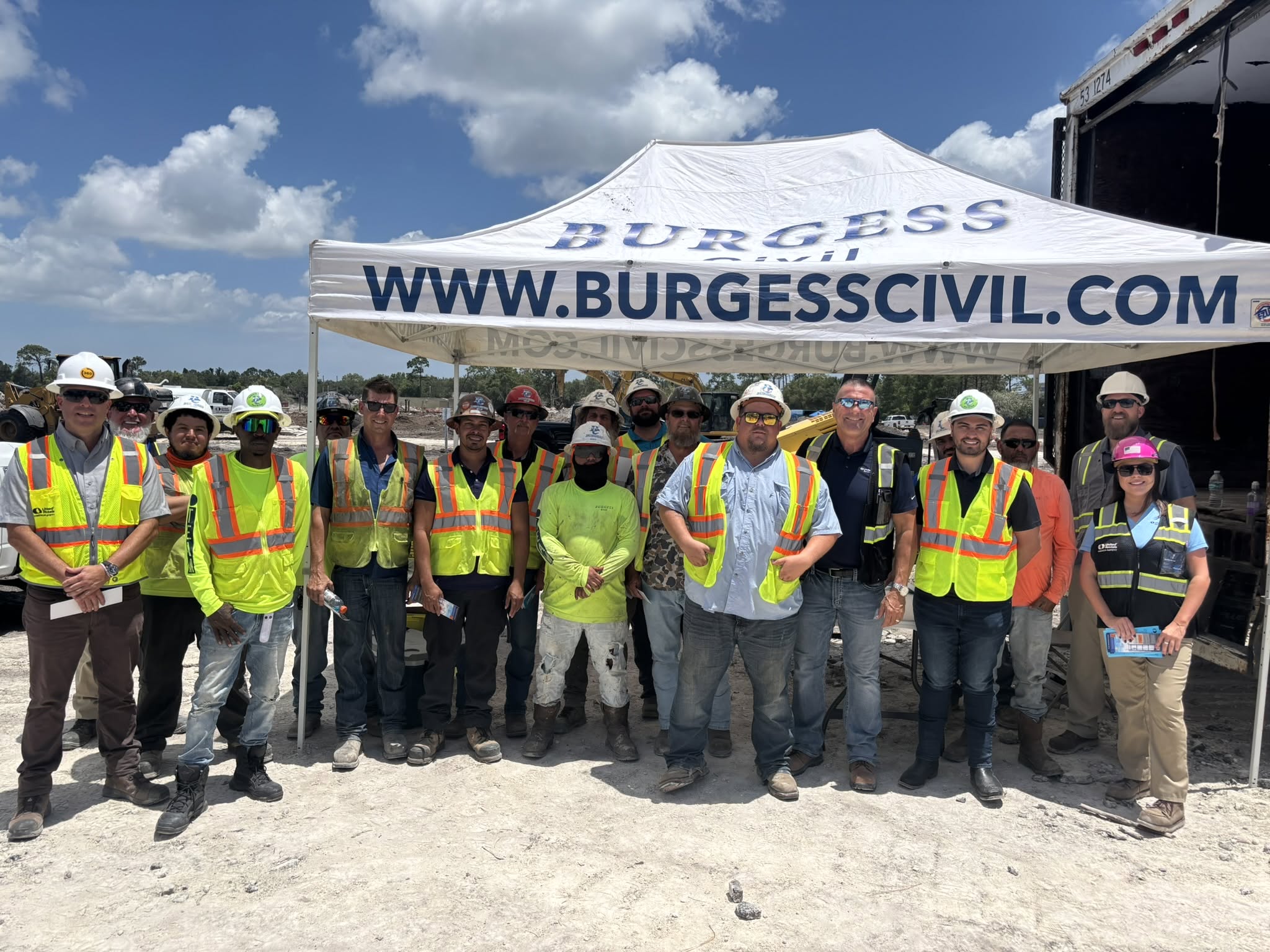

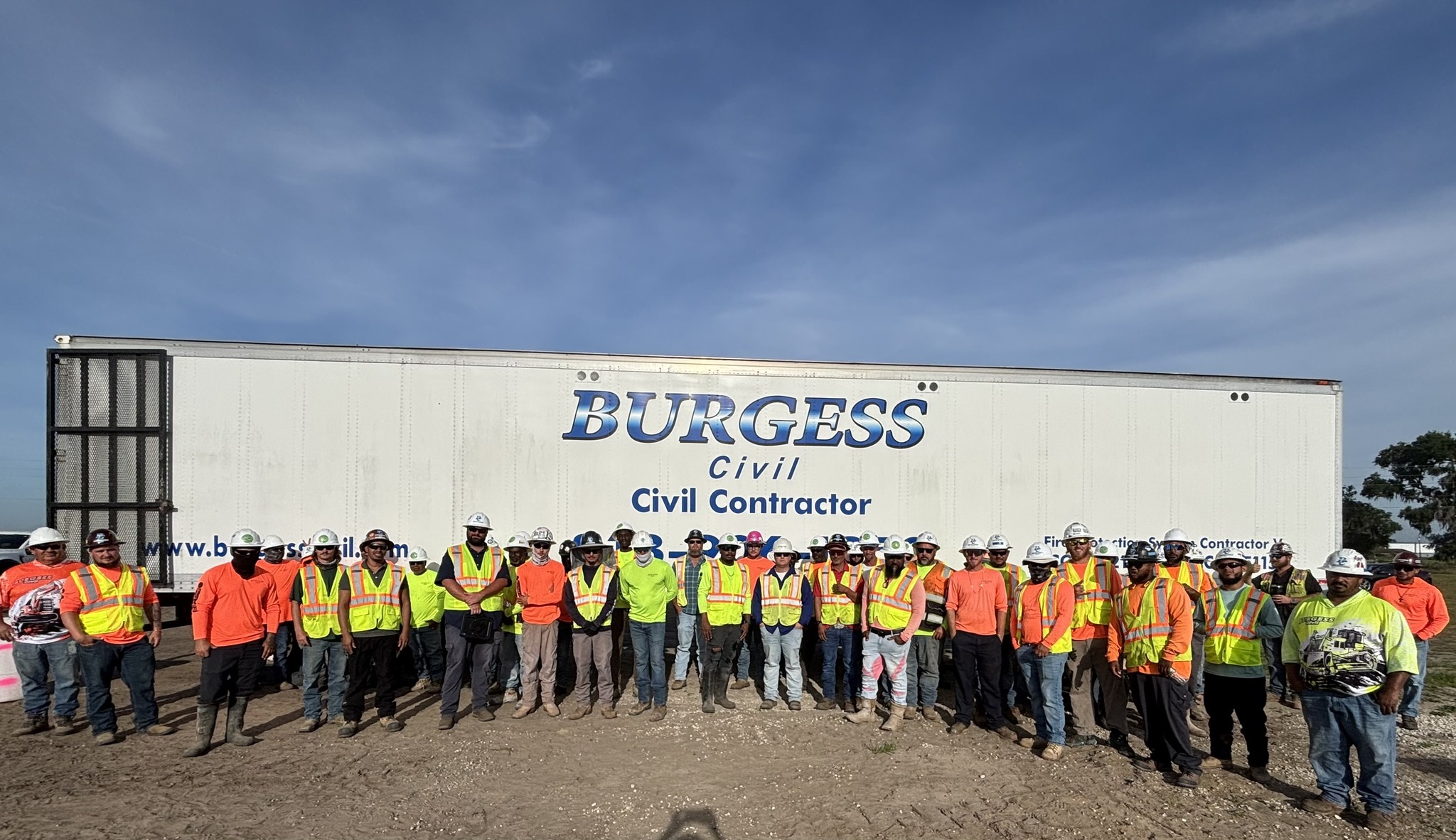
HETA Safety Awareness Day: Risk Assessment at Burgess Civil
In recognition of HETA Safety Awareness Day, our Safety Coordinator Alfredo Valentin shares the importance of preventing serious injuries and fatalities through effective risk assessment.
What Is Risk Assessment?
Simply put, risk assessment is the process of identifying hazards, evaluating risks, and putting controls in place to prevent injuries. At Burgess Civil, safety is not an afterthought, it is built into every phase of our operations.
Breaking Down the Risk Assessment Process
1. Identify the Hazard
Recognize what could cause harm, for example, broken chop saw guards, noisy equipment, or defective chains, straps, or cables. If a hazard exists, it must be identified before work begins.
2. Determine Who Could Be Harmed
Consider everyone in and around the work area: yourself, coworkers, subcontractors, or members of the public. No one should be overlooked.
3. Evaluate the Risk and Apply Controls
Ask whether current precautions are adequate, or if more needs to be done to keep everyone safe. Controls should reduce risk to the lowest reasonably practicable level.
4. Review the Assessment
Conditions on a job site change constantly. Recheck and update your risk assessment as work progresses or when new hazards are introduced.
Why Risk Assessment Matters in Construction
In construction, risks are everywhere:
- Entering and exiting equipment
- Slips, trips, and falls
- Hoisting and rigging operations
- Heavy equipment operations
That is why it is critical to stay alert and never become complacent. Just like in nature, where awareness can mean the difference between life and death, we must stay vigilant to protect ourselves and those around us.
Every Life Is Valuable
By taking the right safety measures, we ensure that every day at Burgess Civil is not only productive, but safe and healthy. Be safe. Your actions make a difference.
—
#SafetyFirst #HETASafetyDay #RiskAssessment #BurgessCivil #ConstructionSafety #WorkplaceSafety